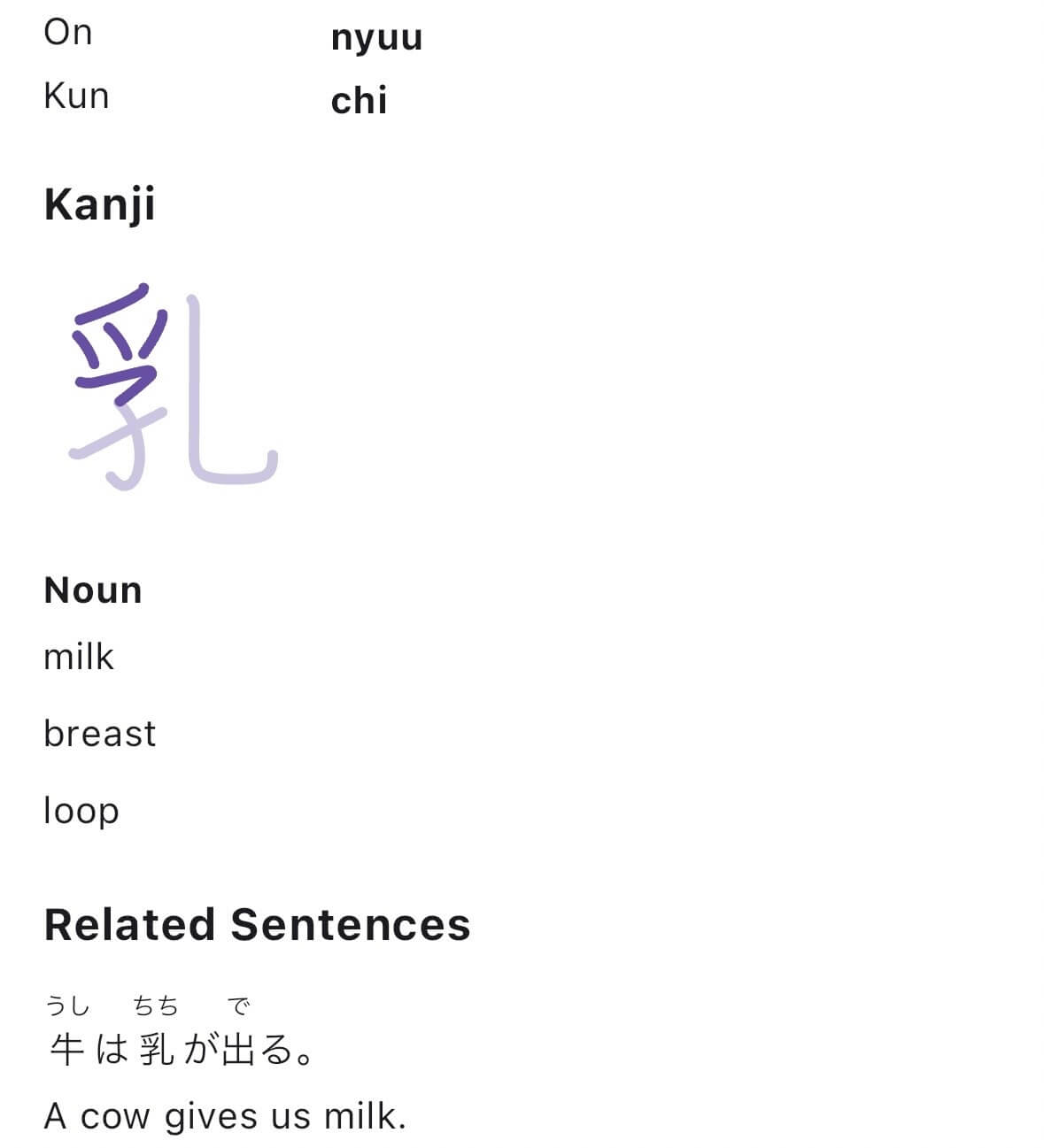
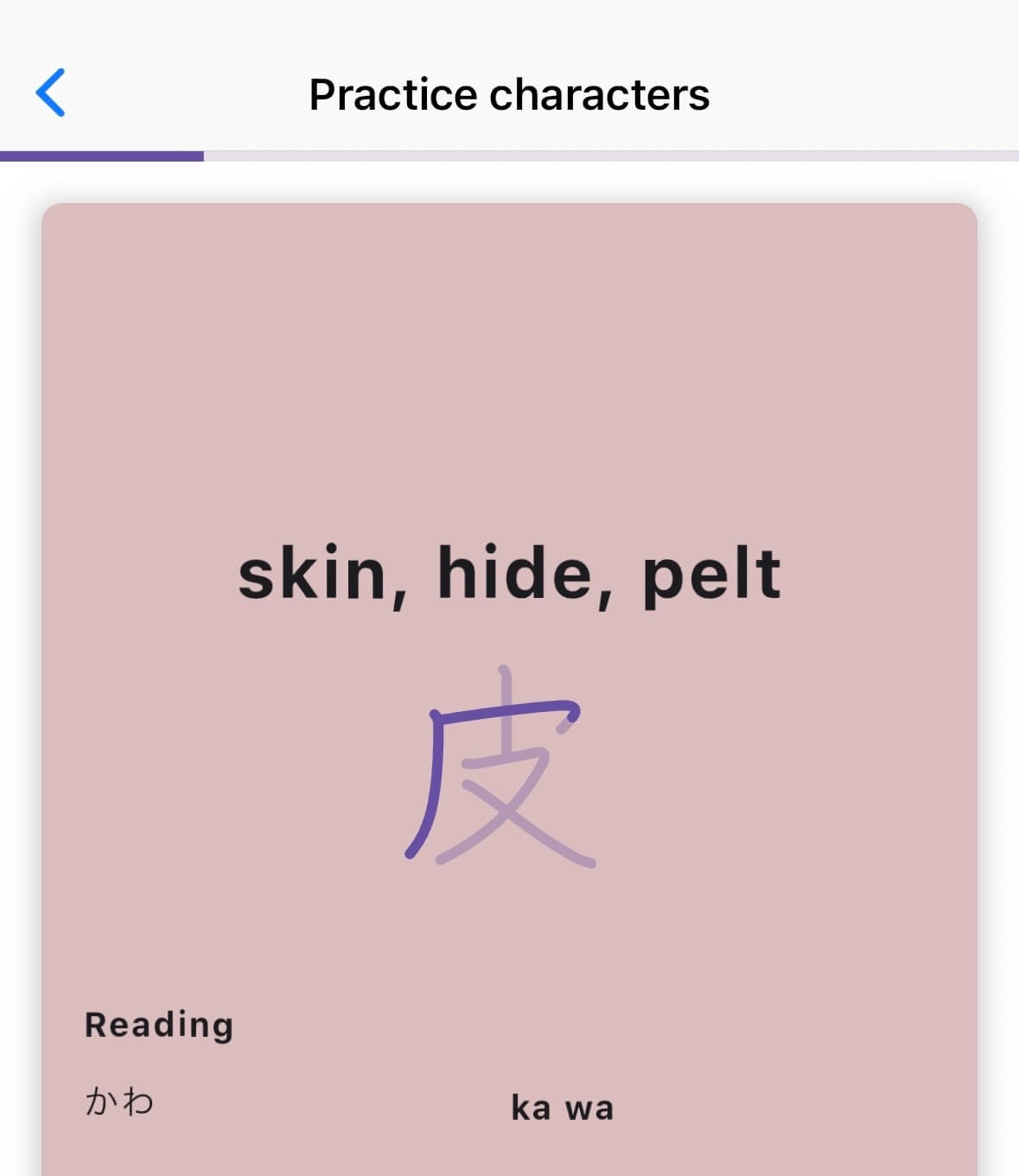
Kanji characters are fundamental to Japanese writing and are also used across various regions in East Asia, each with its own unique practices. SakeSaySo utilizes Kanji Vector Graphics (KanjiVG) to animate the stroke orders of kanji, enrich learning with visually.
Kanji on Vocabulary Pages
Kanji on Flash-Cards
KanjiVG offers detailed vector graphics for kanji, including stroke shape, direction, and sequence. Japanese kanji are derived from Traditional Chinese characters and share many similarities with them in terms of structure and complexity. While Simplified Chinese characters, used predominantly in mainland China, reduce stroke counts and alter forms for easier handwriting and learning, Japanese kanji retain much of the original complexity found in Traditional Chinese. That closeness to Traditional Chinese makes kanji a useful gateway into Japanese while also highlighting cultural and historical ties with places such as Taiwan and Hong Kong, where Traditional Chinese is still used.
The structure of kanji can be broken down into radicals and elements. Radicals help with categorization and memory, while elements play a key role in shaping a character’s full meaning and appearance. This distinction helps learners understand how each kanji is put together. For learners of Japanese using SakeSaySo, stroke-order display is enabled by default on vocabulary pages and flash cards. You can change that in the settings menu.
For anyone fascinated by the depth and diversity of languages, kanji offers a compelling glimpse into the cultural dialogues of East Asia. Take a moment to explore SakeSayso and let us know what you think!